Kotak Mahindra Bank shares fall 5%, quarterly results weaker than expected; Buy, sell or hold now? – kotak mahindra bank share price fall 5 percent after q3 results should you buy sell or hold

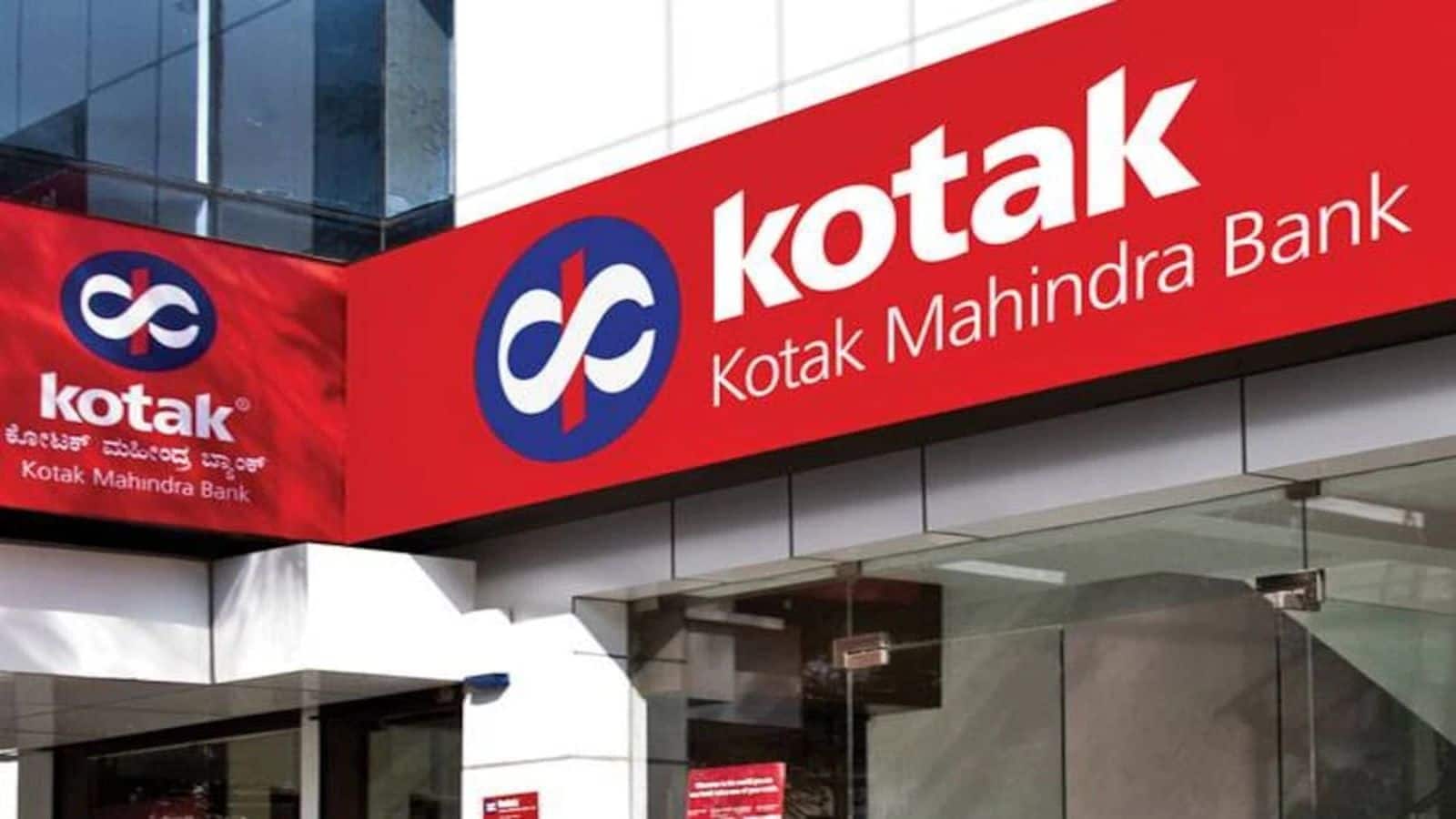
Kotak Mahindra Bank Shares: There was a sharp fall in the shares of Kotak Mahindra Bank on Tuesday, January 27. The stock slipped more than 5% to Rs 400.5 after December quarter results came in below market expectations. This is considered to be the biggest intraday fall in this stock after July 2025. After the quarterly results, the opinion of brokerage firms is divided regarding the shares of Kotak Mahindra Bank. Some brokerages have cut their estimates. At the same time, some still remain bullish on the long term.

December quarter results

Kotak Mahindra Bank on Tuesday, January 24 said that its standalone net profit in the December quarter stood at Rs 3,446.14 crore, which is a growth of about 4% on an annual basis. However, market analysts had expected this profit to be Rs 3,572 crore, which means the results were below expectations.

Asset quality continued to improve slightly. The bank’s gross non-performing asset (NPA) ratio came down to 1.30 percent in the December quarter, which was 1.50 percent a year ago. Net NPA also reduced to 0.31 percent, which was 0.41 percent in the same quarter a year ago.

What is the opinion of brokerage firms?

According to HDFC Securities, December quarter earnings were below expectations. Flat margins, sluggish fee income and relatively high operating expenses weighed on the results, although growth remained strong on both sides of the balance sheet. The brokerage cut earnings estimates for FY26 and FY27 by 5% and 2%, respectively. However, it has maintained its ‘Buy’ rating on the stock and has set a target price of Rs 495 for it, which shows an upside of 17% from the current level.

CLSA believes that Kotak Mahindra Bank’s growth is returning, but the increase in operating expenses after several quarters is a matter of concern. Emkay Global expects return on assets (RoA) to be around 1.9% in FY26, which may improve to 2% in FY27–FY28, provided margins and loss-making provisions normalize.

According to Motilal Oswal, income from Net Interest Income (NII) and other sources was as per estimates, although expenses were higher than expected. The bank has indicated strong growth in the coming quarters. The brokerage has maintained its ‘Buy’ rating on this stock and has set the target price for it at Rs 500. It is estimated that this stock will rise by about 18 percent from the current level.

share status

Shares of Kotak Mahindra Bank have fallen by more than 5 percent in the last one month, but have gained about 4 percent in the last six months. Its current PE ratio is still around 22.50. On Tuesday, the stock was trading as a top loser on Sensex and Nifty as well as Nifty Bank index.

Disclaimer: The views and investment advice given by experts/brokerage firms on Moneycontrol are their own and not those of the website and its management. The website or management is not responsible for this. Moneycontrol advises users to consult certified experts before taking any investment decision.

Source link

Stock Market Live Update: Growth seen in the market in pre-opening, Axis Bank, Kotak Bank, UltraTech Cement in focus – live stock market today january 27 updates bse nse sensex nifty latest news crude axis bank waaree renewable pvr inox hindustan copper torrent pharma zydus life share price

Stock Market Live Update: Kanohar Electricals files IPO papers with fresh issue size of Rs 300 crore

Uttar Pradesh-based transformer maker Kanohar Electricals has filed draft documents with the Securities and Exchange Board of India to raise funds through an IPO to meet its capital expenditure and working capital requirements.

The company proposes to raise Rs 300 crore by issuing fresh shares, while the promoter’s sons family trust will sell 1.45 crore shares through offer-for-sale.

The fresh issue includes a pre-IPO placement of Rs 60 crore, which the company may consider before filing the red herring prospectus with the Registrar of Companies.

Source link

Before investing in SIP, know these 5 big myths, there can be a big loss! – which 5 myths should you stay away from before investing sip watch video to know

markets

Systematic Investment Plan (SIP) in mutual funds has today become the most popular and easiest way to deposit money for crores of investors. Big financial goals can be achieved in the long run by investing small amounts every month. But despite its popularity, many misconceptions and myths regarding SIP are still prevalent among investors.

Source link

How will the stock market be in the budget week – nifty50 is likely to remain rangebound in budget week watch video to know what more did the founder of gemstone equity research and advisory services milan vaishnav share about how the stock market can be in this budget week

markets

Chartist Talk: Milan Vaishnav said that in the current market condition, the important thing would be to be very selective, not to short the market too much and remain invested in comparatively stronger sectors.

Source link

Stocks in Focus: Auto stocks will be in focus on 27 January, big movement can be seen – auto stocks in focus 27 January tata motors mahindra and maruti suzuki in spotlight amid india eu trade deal

Stocks in Focus: Investors will keep a special eye on auto stocks in the trading session of Tuesday, January 27. The reason for this is that there are chances of a trade deal being sealed between India and the European Union. In this, there can be a huge reduction in duty on vehicles coming from Europe. Due to this, there may be movement in the shares of companies like Tata Motors, Mahindra & Mahindra and Maruti Suzuki.

Tariff cuts on European cars

According to a Reuters report on January 25, the Indian government is planning to reduce the import duty on cars imported from the European Union (EU) to 40 percent from the current 110 percent.

Quoting sources, it has been said that this decision could be the biggest step so far towards opening up India’s huge auto market. Experts believe that both sides are moving rapidly towards a Free Trade Agreement (FTA) and it can be announced only on Tuesday.

Luxury European brands benefit

The decision to reduce tariff on European vehicles can change the picture of India’s auto sector. According to experts, this will greatly benefit European luxury brands like Volkswagen, Mercedes-Benz and BMW. Because they will be able to sell their vehicles in India at more competitive prices.

Apart from this, local dealerships and service providers are also expected to get support from this. However, domestic companies may face tough challenges in the luxury segment.

Pressure on which Indian companies will increase?

This change may increase competition for Tata Motors and Mahindra & Mahindra. Especially in the luxury segment. Because cars like Mercedes-Benz, BMW, Audi, Volkswagen will become much cheaper and more competitive in India.

At the same time, Maruti Suzuki and Apollo Tires can avoid major shocks. Because their focus is not on the luxury segment.

Impact on auto and auto ancillary stocks

Experts believe that the reduction in import duty will make the Indian auto market more competitive, giving customers better prices and more options. Also, India will emerge as a strong manufacturing hub, which can increase investment and employment opportunities.

Experts believe that this can have a positive impact on stocks like Bharat Forge. Because they make automotive parts. When European companies’ sales in India increase, they will also increase local assembly/local sourcing.

On which cars will the government reduce taxes first?

According to Reuters, the government led by Prime Minister Narendra Modi has agreed to sharply reduce taxes on some selected cars coming from the 27 member countries of the EU. This reduction will apply to cars whose import price is more than 15,000 euros (about $17,739).

Going forward, there is a plan to reduce the import duty on these cars to 10 percent. This will make it easier for companies like Volkswagen, Mercedes-Benz and BMW to enter and expand in the Indian market.

Impact of low import tax on auto sector

India is the world’s third largest car market in terms of sales, after the US and China. Despite this, the domestic auto sector has remained largely protected so far. Currently, India imposes 70 percent to 110 percent tax on cars imported from abroad.

With the reduction in import duty, foreign auto companies will be able to offer cars at lower prices and understand the market better before starting large-scale manufacturing in India. This will benefit brands like Volkswagen, Renault, Stellantis, Mercedes-Benz and BMW, which are already present in India but were facing problems in expansion due to high tariffs.

Tariff will not be reduced in EV segment for 5 years

According to a Reuters report, no exemption in import duty will be given to battery electric vehicles (EVs) for the first five years. Its aim is to protect the investments made in the EV segment by Indian companies like Mahindra & Mahindra and Tata Motors.

However, after this five-year period, EVs are also expected to benefit from similar duty reductions.

Dolly Khanna Portfolio: Loan reduced by 92%! Big change in the balance sheet of Dolly Khanna’s invested company

Disclaimer: The advice or opinions expressed on Moneycontrol.com are the personal views of the expert/brokerage firm. The website or management is not responsible for this. Moneycontrol advises users to always seek the advice of a certified expert before taking any investment decision.

Source link

Stocks to Watch: These 23 stocks will be in focus on Tuesday, January 27, can get a chance to earn big – stocks to watch 27 January axis bank marico indian hotels adani enterprises adani green ultratech cement jsw energy bpcl and other 23 shares in focus

Stocks to Watch: On Tuesday, January 27, stocks of many big companies in the Indian stock market will be in the eye of investors. December quarter results, big acquisitions, changes in promoter stake and capex updates could bring movement in the market. Updates related to big companies like Axis Bank, Marico, Adani Group, UltraTech Cement and JSW Energy will be in special focus. There can be short term movement and earning opportunities in these 23 stocks today.

Private sector Axis Bank reported a net profit of ₹6,489.6 crore in the December quarter. This is better than CNBC-TV18’s estimate of ₹6,046 crore. Profit has increased by 3 percent on an annual basis. The bank’s strong core income and stable asset quality supported the results.

FMCG giant Marico, making a big bet in the premium snacking segment, has decided to buy 93.27 percent stake in Zea Maize Private Limited, owner of 4700BC brand. This deal of about ₹ 226.83 crore from PVR INOX can give a new impetus to Marico’s foods business. 4700BC is known for premium snacks like gourmet popcorn, popped chips and makhana in India.

Famous investor Rekha Jhunjhunwala has reduced her stake in Tata Group’s hotel company Indian Hotels in the December quarter. According to BSE data, he sold about 1,45,23,200 shares in the quarter, which is equivalent to about 1.02 per cent stake in the company. After this sale, his holding has reduced to 1,42,87,765 shares, i.e. about 1 percent.

Adani Group has given clarification regarding the SEC case. The company has clarified that it is not part of any SEC investigation or proceedings and no charges have been filed against them. The group reiterated that it has no direct involvement in this matter.

Adani Green has started a new 50 MW solar project in Khavda, Gujarat. With this, the total operational renewable capacity of the company has increased to 17,287.2 MW. The company is working rapidly on an aggressive plan for capacity expansion this year.

UltraTech Cement’s December quarter net profit stood at ₹1,729.4 crore. The estimate was ₹1,540 crore. Revenue stood at ₹21,830 crore, which was higher than expected. EBITDA was ₹3,915 crore and margin was around 18 percent. However, consolidated volume growth was 15 percent, which is slightly lower than expected.

JSW Energy performed well in the December quarter. Net profit increased to ₹420 crore, from ₹168 crore last year. Revenue increased by 67.4 percent to ₹4,081 crore. EBITDA was recorded at ₹2,030 crore and margin at 49.7 per cent.

BPCL’s December quarter results were better than CNBC-TV18 poll. Net profit stood at ₹7,545 crore. Whereas, the estimate was ₹6,847 crore. EBITDA stood at ₹11,677 crore and there was strength in margins and earnings on a quarterly basis as well.

Shyam Metalics’ Q3 results were mixed. Net profit was almost flat at ₹197 crore, while revenue grew 18 per cent to ₹4,421 crore. EBITDA stood at ₹487 crore and margin at 11 percent.

20 Microns saw improvement in its December quarter results. EBITDA increased to ₹277 crore and margin stood at 12.91 percent. Consolidated net profit stood at ₹150 crore, while revenue remained flat at around ₹2,150 crore.

Jayaswal Neco has signed MoU with Maharashtra government for investment of ₹12,262 crore in Davos 2026. The company will set up a 2 MTPA steel plant in the state, which is considered important for long-term growth.

Hindustan Copper has been declared the preferred bidder for the Baghwari-Khirkhori Copper Block in Madhya Pradesh. This is expected to strengthen the company’s reserves and future mining capacity.

Veteran IT firm HCLTech has decided to buy Singapore’s Finergic for SGD 19 million. This acquisition will strengthen the company’s fintech business and its hold in the Asia-Pacific market.

Pharma company Torrent Pharma has purchased an additional 2.36 percent stake in JB Chemicals. This takes the total stake to 48.75 percent. Along with this, the company’s Dahej plant has received a clean chit from the US FDA with Zero Observations.

Urban Company suffered a loss of ₹21.2 crore in Q3, compared to a profit in the same quarter last year. However, revenue has increased by 32.9 percent to ₹382.7 crore. The company has approved manufacturing partnership with Amber Enterprises.

US FDA inspection on Zydus’ Ankleshwar Unit-2 has been completed, in which the agency has given 3 Observations. The inspection was conducted between 19 and 23 January.

Nuvama Wealth’s December quarter results were flat. Net profit stood at ₹254 crore, while revenue increased by 6.7 per cent to ₹1,104 crore.

Godrej Consumer’s Q3 results were weaker than polls, but operating performance was better on an annual basis. There was improvement in EBITDA and margins, while net profit remained almost flat.

DCB Bank showed stable and better performance in the December quarter. Net profit increased by 21.8 percent to ₹184 crore. Gross NPA came down to 2.72 percent and Net NPA came down to 1.10 percent.

IndusInd Bank’s December quarter results were better than polls, but looked weak on an annual basis. Net profit fell 90 per cent to ₹128 crore, while NII also recorded a decline.

Gandhar Oil showed a spectacular surge in the third quarter. Net profit increased by 67.9 percent to ₹32.4 crore and EBITDA increased by 39.3 percent to ₹59 crore. Margin reached 5 percent.

Granules India’s December quarter results were strong. Net profit increased by 27.7 percent to ₹150.2 crore and EBITDA increased by 33.4 percent to ₹308.4 crore. Margins also improved.

Hindustan Oil Exploration

There has been a top management change in Hindustan Oil. Jagdeep Narayan Singh has been appointed Chairman and Additional Director, while Managing Director R. Jeevanandam has resigned.

Rare Earth Stocks: Government will spend ₹72 billion for rare earth minerals, these three companies can benefit

Disclaimer: The information provided here is being given for information only. It is important to mention here that investing in the market is subject to market risks. As an investor, always consult an expert before investing money. Moneycontrol never advises anyone to invest money here.

Source link

Natural Gas: US natural gas surpassed $6 for the first time since 2022, raising concerns over supply disruptions – natural gas us natural gas surpassed 6 dollar for the first time since 2022 raising concerns over supply disruptions

Natural Gas: US Natural Gas rises above $6 for the first time since 2022. In fact, due to extreme cold in most parts of the country, demand for heating has increased, while on the other hand, due to interruption in supply, prices have increased.

Futures for February delivery rose as much as 19% to $6.288 per million British thermal units in early Asian trading on Monday. Earlier last week there had been a rise of 70%, which was the biggest weekly gain in records since 1990.

The winter storm is estimated to have knocked about 10% of US natural gas production offline. At the same time as demand for heating and power-plant fuel increased. The massive freeze has strained power grids and disrupted transport links, grounding thousands of flights.

The largest US grid operator is pressuring power plants to secure supplies of natural gas this week as extreme cold is expected to push electricity use to winter records. Gas flow at US liquefied natural gas export plants has dropped to its lowest in a year due to production disruptions caused by winter storms.

Natural gas prices hit their highest since December 2022, as European demand for US LNG surged after Russia’s invasion of Ukraine at the beginning of the year cut supplies from Russia.

The impact on next month’s prices is also increasing because the February contract is ending on Wednesday, due to which liquidity is very low. Open-interest on Monday was less than 25,000 contracts, compared with 340,000 contracts for March futures. The March contract rose 11% to $3.997 per million Btu.

Source link

Stock Market Holiday: Is the stock market open today, 26th January? Know the complete update with the list of holidays – stock market holiday is stock market open today on republic day 2026 check full list here

Stock Market Holiday: Today India is celebrating its 77th Republic Day, and on the occasion of this national festival, both the Indian stock markets NSE and BSE will remain completely closed today, Monday. This is the second trading holiday this year. Let us tell you that along with equity, there will be no work in derivatives (F&O), currency and commodity markets (MCX) today. Commodity markets generally have evening sessions open, but on national holidays like Republic Day, both morning and evening sessions of MCX will remain closed. Now trading in the market will start normally from 9:15 am tomorrow, i.e. Tuesday, January 27.

Will the market be open on Sunday, February 1?

Usually, there is a weekly holiday in the stock market on Saturday and Sunday, but this time a big decision has been taken in view of the historical importance of the Union Budget 2026. NSE and BSE have issued official circulars confirming that the market will remain fully open on Sunday, February 1. This decision has been taken so that investors can react in real time to the policy announcements and tax changes made during the budget speech and maintain transparency in the market. Trading timings during this special session will be from 9:15 am to 3:30 pm like a normal working day, with trading in all three segments – Equity, Derivatives and Currency.

List of upcoming holidays in stock market

26 January- Republic Day

03 March- Holi

26 March- Shri Ram Navami

03 April- Good Friday

01 May- Maharashtra Day

How was the market condition last week?

Last week was full of ups and downs for stock market investors. Nifty 50 fell 2.51% to close at 25,048 due to global uncertainty and pre-Budget caution. At the same time, Sensex is also down by about 1,000 points at 81,537. Experts believe that when the market opens tomorrow, budget expectations and ‘short covering’ may support the market.

Source link

Stock Market Holiday: Will the stock market remain closed on 26 January? Check full list of holidays in 2026 – stock market holiday january 26 republic day nse bse mcx closed check full indian stock market holiday list for 2026

Stock Market Holiday: Indian stock markets will remain completely closed on 26 January 2026 on the occasion of Republic Day. On this day the country is celebrating the 77th anniversary of the implementation of the Constitution.

In such a situation, investors, traders and everyone associated with the market will have to plan their positions in advance, because there will be no trading in any segment for the whole day. Republic Day is a national holiday. The stock markets remain closed on this day as per the fixed holiday calendar released at the beginning of the year.

Will both NSE and BSE remain closed?

Yes, trading will come to a complete halt on both the National Stock Exchange (NSE) and Bombay Stock Exchange (BSE) on Republic Day 2026. On this day, trading in equity segment, equity derivatives i.e. F&O, currency derivatives and Securities Lending and Borrowing (SLB) will remain closed. Furthermore, there will be neither a pre-open session nor a post-market session.

What will happen to the commodity market?

The commodity market will also remain completely closed on Republic Day. There will be no trading in any session throughout the day on Multi Commodity Exchange (MCX). This means that no deals will be possible in gold, silver, crude oil, natural gas and agricultural commodities throughout the day.

Share market holiday list in 2026

When will the market open after the holidays?

The stock markets will reopen at their normal timings on Tuesday, January 27, 2026, after Republic Day. The pre-open session on that day will start at 9:00 am, while regular trading will run from 9:15 am to 3:30 pm. Equity, Derivatives, Currency and Commodity – all segments will function as normal, unless affected by any other scheduled holidays.

Why does the market remain closed every year?

26 January i.e. Republic Day is a mandatory trading holiday for Indian stock markets. It is included in the fixed holiday list, that is, every year the markets remain closed on this date. On the contrary, there are some festivals or regional holidays whose date may change every year.

Source link