US Supreme Court postpones its decision on Donald Trump’s tariff – us supreme court does not deliver its verdict on donald trump tariff imposition

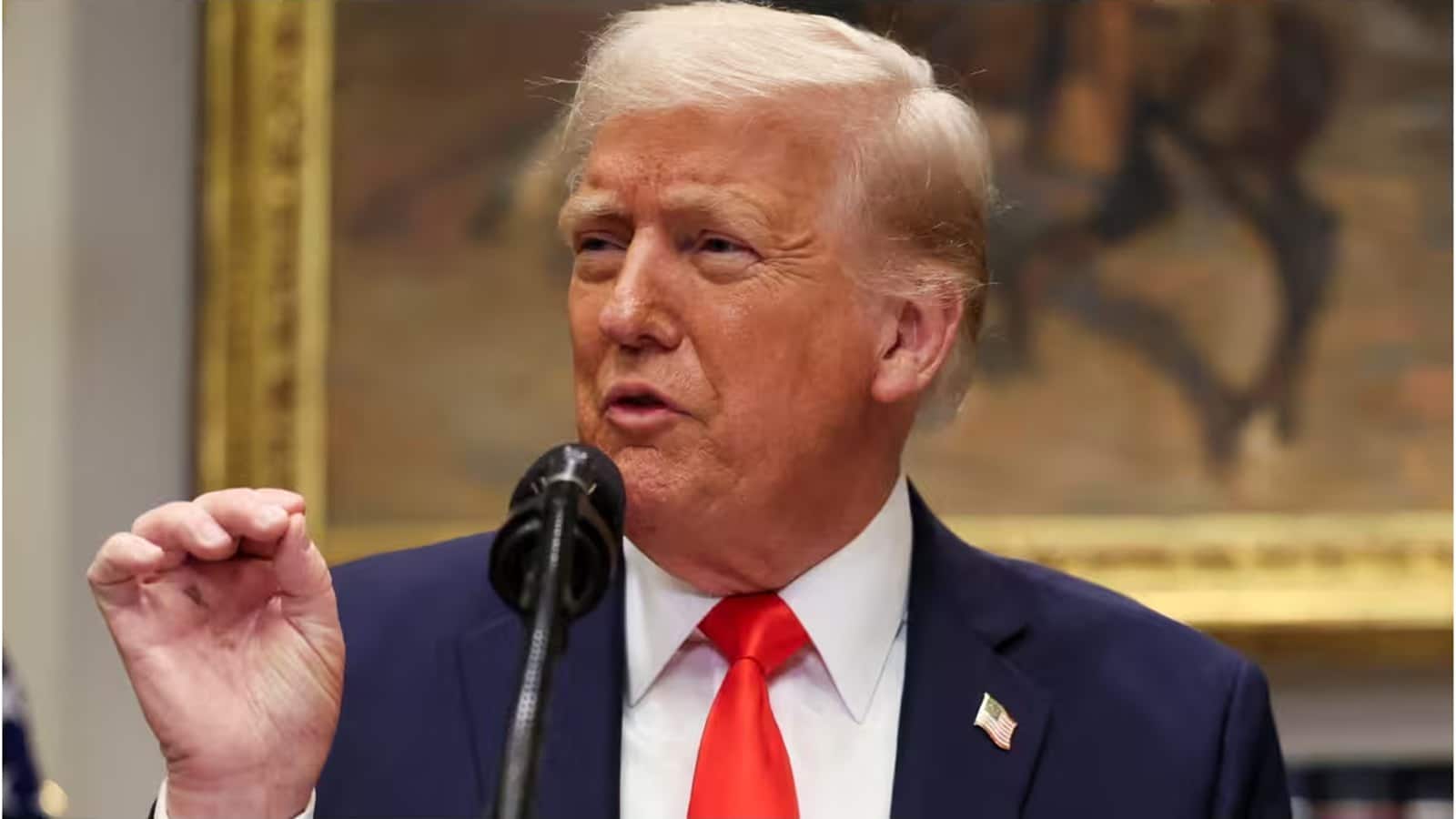
On January 9, the US Supreme Court did not give its decision on the petition challenging President Donald Trump’s decision to impose tariffs. All eyes of the world including India were focused on this decision. This week there was a lot of pressure on the stock markets in India. The market feared that if Trump increased tariffs on India, it would have a negative impact. There is already pressure on Indian markets due to selling by foreign funds. On the other hand, the delay in the trade deal between India and America has also affected the markets.

More opinions from judges may come within the next two weeks

US judges issue the first comprehensive opinion on the term. The court said that more opinions may come during the next two weeks. The judge can give his opinion after returning from holidays. Uncertainty has increased due to no decision in this matter. Uncertainty has increased especially in those markets which have been sensitive to US trade policy signals. Trump’s tariffs have affected exports in India.

Trump used 1977 emergency power to impose tariffs

Trump had used an emergency power of 1977 to impose 10-50 percent tariffs on many countries of the world. It has imposed tariffs on many countries including China, Canada and Mexico. It has imposed very high tariffs on India, which has affected bilateral trade with America. The US government has defended the decision to impose tariffs. He says that tariff has been imposed on these countries keeping in mind national security and trade imbalance, which is correct.

Lower courts have said that Trump imposed tariffs beyond his jurisdiction.

America’s lower courts have said in their decision that Trump has taken decisions to impose tariffs beyond his jurisdiction. After an appeal against this decision, the matter is now in the Supreme Court. Trump’s tariffs have affected India. There has been a decline in the growth of exports. Especially the MSME sector has faced difficulties due to this. America has imposed 50 percent tariff on India. Out of this, 25 percent tariff has been imposed on purchasing oil from Russia.

Source link

Vodafone Idea gets big relief on AGR dues, are good days coming for the shares now? – vodafone idea gets major agr relief is a turnaround in the stock finally ahead

Are good days really going to come for Vodafone Idea shares? Vodafone Idea, which has been struggling with debt, AGR disputes and existential questions for years, has got a big relief from the government. The company’s AGR dues have been frozen, the payment deadline has been extended and now the path for the company to remain in business seems clear. Let us understand in detail how big this relief is, what impact it will have on the company’s balance sheet, what is the real challenge ahead for Vodafone and what signals investors should keep an eye on.

First of all let us understand the issue of AGR i.e. Adjusted Gross Revenue. The fee that the government has to pay on telecom companies is based on AGR. After years of legal battles, Vodafone Idea had accumulated huge AGR dues, which weakened the company’s financial condition.

Now on January 9, the company told the exchanges that the Telecom Department has frozen its AGR dues till December 31, 2025 at ₹87,695 crore and has fixed a new schedule of payment and this new schedule is going to provide relief to the company.

What are analysts saying?

Vivekananda S, analyst at Ambit Capital Research, says that with this decision, the possibility of raising money through loan for Vodafone Idea has increased significantly. According to him, now the matter has shifted from “will the company survive or not” to “how will the company work in future”. Now the attention of investors will be on how well the company is able to implement its plans going forward.

Impact on balance sheet and cash flow

The biggest benefit of AGR freeze is that the pressure of spectrum related debt will reduce. Cash outflows will reduce in the near term, freeing up money to invest in network upgrades. According to sources, the company is trying to take new loans of about ₹30,000 crore from banks. Apart from this, in December the management also discussed an immediate loan of ₹5,000 crore from existing lenders to take care of day-to-day expenses and operations. If this funding is received, the company’s breathing will be easier to some extent.

New schedule of dues payment

Now let’s talk about the new timeline of payment. The company has AGR outstanding of Rs 87,695 crore from FY 2007 to FY 2019. This includes principal, interest, penalty and interest on penalty. Now this outstanding amount has been frozen. The company said that this entire amount will be paid in three phases.

In the first phase, the company will have to pay a maximum of ₹ 124 crore every year for the next six years between March 2026 and March 2031. In the second phase, ₹100 crore will have to be paid every year for four years from March 2032 to March 2035. After this, the remaining AGR dues will be paid in six equal annual installments between March 2036 and March 2041.

Along with this, the Telecom Department will also form a committee, which will re-review the AGR dues. The decision of this committee will be final and the amount decided after re-evaluation will have to be paid in equal installments between March 2036 and March 2041.

Why did the government give this relief?

Government sources say the move serves multiple purposes. The central government holds a 49% stake in Vodafone Idea, so the stability of the company is directly linked to government interest. Apart from this, maintaining competition in the telecom sector and protecting the interests of about 20 crore customers is also the priority of the government. The Supreme Court had also said at the end of 2025 that in view of larger public interest, the government can reconsider AGR.

What will happen next?

The company has got relief, but will this improve the company’s business? Market expert Vivekananda S says that the real test begins now. The company is continuously losing customers. The reason for this is not only the feature phone users shifting to 4G, but the company’s existing smartphone users are also leaving the network. In big markets like Mumbai and Delhi, many users have reduced their usage on Vodafone Idea’s network or have started adopting secondary SIM cards. A major reason for this is also believed to be the company’s delay in investing in 5G. Therefore now the company’s capex strategy will be decisive.

5G and network investment: gamechanger or challenge?

India’s telecom market is increasingly data-driven. Vodafone’s rival companies have already placed big bets on 5G. The question for Vodafone Idea is whether it will be able to make timely and adequate investments. AGR relief has definitely opened the way, but both raising investment and spending it in the right place are necessary. If the company is unable to improve network quality and coverage, customer return may be difficult.

Overall, the market will keep an eye on how much funding Vodafone Idea gets from banks and what are its terms. Also, the company’s capex level and announcements related to 5G will be monitored. If these announcements stop the decline in the number of subscribers or show improvement in its average revenue per user (ARPU), then market confidence may increase.

Also read- Chaos in the stock market! Sensex falls 2200 points in 5 days, investors lose ₹13 lakh crore

Disclaimer: The views and investment advice given by experts/brokerage firms on Moneycontrol are their own and not those of the website and its management. The website or management is not responsible for this. Moneycontrol advises users to consult certified experts before taking any investment decision.

Source link

Market outlook: The market closed with a decline for the fourth consecutive session, know how it might perform on January 12th – market outlook sensex nifty closed lower for the fourth consecutive session find out how it might perform on January 12th

Stock Market news: Indian benchmark The indices closed with losses for the fourth consecutive session on January 9. Nifty went below 25,700. closing On, Sensex 604.72 points or 0.72 percentage Falling to 83,576.24 and Nifty 193.55 points or 0.75 percentage Fell to close at 25,683.30. Today about 918 shares rose, 2889 shares declined and there was no change in 131 shares.

Adani Enterprises on Nifty, Sriram finance, NTPC, ICICI bank and live financial Top loser stay, while Gainers In Asian paints, ONGC, India electronics, HCL Technologies and eternal Stay involved.

BSE midcap The index declined 0.9%, while small cap The index fell 1.7%. Sectoral indexes If we talk about IT, PSU Except Bank, Oil & Gas, all other indices closed with losses. auto, FMCG, realty, consumer durables in 1-2 percentage There was a decline of.

market this week

weekly Basis But if we look at it, the market’s 2-week rise has ended and the biggest weekly decline in 3 months has been recorded. this week BSE In listed market of companies cap It has decreased by more than Rs 15 lakh crore. Around 2.5 in Nifty percentage There has been a decline. 6 in all indexes percentage Damage up to Rs. There has been loss in Nifty Bank. But, it has performed better than the rest of the indices. this 1.5 percentage The bottom is closed. benchmark as well as midcap The index has also fallen. this 2.5 percentage Has closed below more than.

on january 12th How Market trend may remain

HDFC securities In Senior technical Research Analyst Nagraj Shetty It is said that the decline in Nifty continued on Friday also and it closed with a fall of 193 points. After a weak start, the market fell further and continued for most of the session. finally a little recovery And Nifty closed near the lower level.

deli one on the chart long bear candle made, in which minor lower shadow Was. technicallythis market action Signals a sharp decline in the market. weekly also one on the chart Long bear candle made, which lasts for a few weeks Consolidation movement Market bullish after Reversal Gives indication of. This is not a good sign and indicates further weakness in the coming week. Nifty current trend Remains weak. of 25700 support If it goes below 25400, it may further fall to 25400 in the coming week. Immediately resistance Is at 25900.

Religare broking K Ajit Mishra Says markets continued to fall on Friday and remain weak global The signals led to a decline of more than 0.50 percent. After the initial rally, Nifty soon came under selling pressure and continued to fall throughout the session and eventually 0.75% With a decline of 25,683 level Close to.

technical attitudes If we look at it, this fall in Nifty short-term The acceleration has been stopped. Now the index is at 25,600 level Located around 100 DEMA near your medium-term support zone again Test doing. Falling below this will reach 25,450 and 25,300. level More pressure may come. upwards, short-term moving averagei.e. around 26,000 20 DEMA may be difficult to regain. In the current environment, controlled position Sizing and on both sides balanced exposure with selective approach Adoption is recommended.

lkp securities Of Senior technical Analyst metaphor day Says Nifty has fallen further below 50 EMA Has gone below , which is a sign of increasing weakness. The index closed at a multi-day low due to selling pressure. of market sentiment Clearly visible negative. Short term In, trend May remain weak, with Nifty at 25,550–25,500 There is a possibility of going down till. on the upper side, resistance Is at 25,850.

Kiri Industries share price : 7 This chemical stock slipped 30% in the sessions, know shareholders Why were you disappointed?

Disclaimer, moneycontrol.com views given on expert Has his own personal views. website or management for this Responsible Not there. users To money control It is advised that before taking any investment decision certified expert Take advice.

Source link

There is scope for 18% rise in Petronet LNG shares! JPMorgan raises rating and target price – petronet lng shares gained as much as 4 percent as jpmorgan upgraded the stock and raised its price target check the details

Brokerage firm JP Morgan Petronet LNG Limited Has increased the rating and target price for the stock. The rating has been upgraded to ‘Overweight’. The price target is now ₹335 per share. The revised target is about 18% more than the previous closing price of the share. According to the brokerage, Petronet LNG’s earnings may pick up due to better volumes after the 50 lakh tonne per annum expansion started in March at Dahej.

JP Morgan also cited 5% tariff increase and low impairment costs as key positive factors. However, the brokerage cited renegotiation of dowry tariff and risks arising from large PDH capex as key valuation concerns. It has also been said that these issues are likely to remain unresolved for some time. Meanwhile, JPMorgan believes rising earnings will support the stock.

Earlier, Citi had recently warned of regulatory risks for Petronet LNG in a note. It was said that due to the changing regulatory and competitive environment, the bargaining power may shift in favor of the company’s offtakers. Offtakers means those who buy goods/services from the company.

Petronet LNG shares saw a rise of up to 4 percent in a day on January 9 and the price reached a high of Rs 295.80 on BSE. The market cap of the company is more than Rs 43500 crore. The face value of the share is Rs 10. Promoters hold 50 percent stake in the company. The stock has a 52-week adjusted high of Rs 335.75 and adjusted low of Rs 263.70 on BSE. Currently 33 analysts track Petronet LNG. Of these, 15 have given a ‘Buy’ rating to the stock, while 9 have recommended ‘Hold’ and 9 have recommended ‘Sell’.

Financial health of the company

Petronet LNG’s revenue on standalone basis in the July-September 2025 quarter stood at Rs 11009.13 crore. Meanwhile, net profit was recorded at Rs 805.75 crore. In the financial year 2025, the company’s revenue was Rs 50979.56 crore and net profit was Rs 3926.37 crore. Petronet LNG is a joint venture between the Government of India and the country’s major Public Sector Undertakings (PSUs).

Disclaimer: The advice or views expressed on Moneycontrol.com are the personal views of the expert/brokerage firm. The website or management is not responsible for this. Moneycontrol advises users to always seek the advice of a certified expert before taking any investment decision.

Source link

NHPC Share Price: CLSA expects the share of government company to rise by 43%, due to 3 reasons 2026 could be a year of big change – nhpc share may rise upto 43 percent clsa has a high conviction outperform rating said 2026 could be a transformative year for psu check target price

Brokerage firm CLSA has launched a government company NHPC Ltd. Has been given a ‘High Conviction Outperform’ rating. The target price for the stock has been kept at ₹117 per share. This target is about 43% more than the closing price of the stock on Thursday. CLSA said in a note on Friday, January 9 that 2026 could be a year of major change for NHPC. The brokerage expects the company’s installed capacity to grow by 64% on a year-on-year basis. Earnings per share are estimated to grow by 90% during FY25 to FY27.

CLSA further said that this growth will further strengthen NHPC’s long-term, ten-year expansion story. CLSA has listed 3 main reasons which can give rise to the stock…

– Finalization of tariff for Parvati II project, which is approximately 25% of NHPC’s regulated equity base.

– Fully operationalized Subansiri Lower Hydro Electric Project. This is NHPC’s second largest project and is expected to be completed by the fourth quarter of 2026.

– Possibility of getting 4 hydro power projects and one pumped storage project in 2026. This can improve the visibility of the company’s earnings and growth till FY35.

NHPC shares rise

NHPC shares are rising on Friday. In early trade, the stock hit a high of Rs 83.75 on BSE, a jump of about 2 percent from the previous closing price. The market cap of the company is more than Rs 83100 crore. Currently, 8 analysts are tracking NHPC. Of these, 4 have given a ‘Buy’ rating for the stock, one has advised ‘Hold’, while 3 have given a ‘Sell’ call.

Source link

Stock in Focus: Defense company gets order worth ₹275 crore from Indian Air Force, stock will remain in focus – stock in focus astra microwave jv bags 275 crore rupees indian air force order shares to remain in spotlight

Stock in Focus: Defense company Astra Rafael Comsys Private Limited has received an order worth Rs 275.27 crore (including taxes) from the Indian Air Force. This is a joint venture between Astra Microwave Products and Rafael Advanced Defense Systems Ltd of Israel. This order is related to integration and installation of software in the aircraft.

What’s included in the order

Under this contract, Software Defined Radio (SDR) will be integrated in MiG-29 fighter jets. Along with this, Network Centric Operation (NCO) application will also be installed in MiG-29 aircraft.

Apart from this, supply of 24 Software Defined Radios for Light Combat Aircraft LCA Tejas Mk-1A is also part of this order.

When will the project be completed

The contract has been awarded by a domestic defense entity and is to be completed within 12 months. That means this entire project will be executed in the next one year. The company will get a part of this order through its joint venture Astra Rafael Comsys.

Astra Microwave Products has clarified that this order is not any kind of related party transaction. According to the company, neither the promoter nor the promoter group has any interest or stake in the Indian Air Force.

Why is this deal important for Astra Rafael

This contract is being considered a big boost for Astra Rafael Comsys. It also reflects the growing domestic collaboration on software defined and network centric technologies in the defense sector in India.

This is expected to strengthen the company’s aerospace and defense electronics portfolio, especially in the areas of avionics integration and mission-critical communication systems.

Status of Astra Microwave shares

Shares of Astra Microwave Products closed at Rs 1,005.20, up 1.77% on the NSE on Thursday, January 8. The stock is up 14.19% in 1 month. At the same time, it has given a return of 27.58% in 1 year. It has given a multibagger return of 680.74% in 5 years. The market cap of Astra Microwave is Rs 9.54 thousand crore.

Source link

Stocks to Watch: Keep an eye on these 16 stocks on Friday 9 January, you can get a chance to earn big – stocks to watch friday 9 january bajaj finserv bel power grid rvnl astra microwave vedanta ireda and other shares in focus

Stocks to Watch: There may be intense movement in the market in the trading on Friday, January 9. Because important news related to many big companies has come to light. At some places, big orders have been received, while at some places results, regulatory decisions and stake-related events are increasing the focus of investors. Due to these factors, sharp movement may be seen in some stocks. In such a situation, these 16 stocks are going to be in special focus for short term traders and investors.

Bajaj Finserv has completed the acquisition of 23 per cent stake in its insurance companies from Allianz SE. The total value of this deal is Rs 21,390 crore. With this deal, the company’s stake in the insurance business has been strengthened and the strategic partnership has also been strengthened.

Highway Infrastructure Limited has received an order worth Rs 328 crore from NHAI, which is considered an important contract for the company’s highway operations business. The order pertains to the operation and collection of user fees at KAZA fee plazas on the Chilakaluripet-Vijayawada section of National Highway 16 in Andhra Pradesh, the total length of which is 82.5 kilometres.

Bharat Electronics Limited (BEL) has received new orders worth additional Rs 596 crore since January 1. This has further strengthened the company’s order book and reflects the continued demand in the defense sector.

Elecon Engineering’s net profit declined by 33 per cent year-on-year to Rs 72 crore in the December quarter from Rs 107.5 crore in the same quarter last year. However, the company’s revenue increased by 4.3 percent to Rs 551.7 crore in the same quarter, which was Rs 528.9 crore a year ago.

The market coupling case involving the Indian Energy Exchange (IEX) is listed for hearing tomorrow at 10:30 am. Investors are keeping an eye on the stock due to uncertainty regarding regulatory developments.

Power Grid Corporation has been declared the successful bidder for setting up a new inter-state transmission system under Tariff Based Competitive Bidding. This has further strengthened the company’s important role in the national power infrastructure.

Government railway company Rail Vikas Nigam Limited (RVNL) has received a contract worth Rs 201.23 crore from East Coast Railway. The project involves setting up a 200 wagon capacity wagon POH workshop at Kantabanji, Odisha, which will be completed in 18 months.

Defense company Astra Microwave Products said that its joint venture company Astra Rafael Comsys has received an order worth Rs 275.27 crore from the Indian Air Force. This order is related to software integration and installation in the aircraft.

Mining giant Vedanta, while clarifying the recent news, said that the Ministry of Petroleum and Natural Gas had rejected its application for contract extension till September 2025. The company has filed a petition against this decision in the Delhi High Court, where the government has been issued a notice and directed to maintain the status quo.

Waaree Renewable Technologies

Leading renewable company Waari Renewable Technologies has received the Letter of Award for the project with a revised capacity of 704 MWAC. However, the commercial value of this project has come down to Rs 1,039 crore, which was earlier Rs 1,252 crore.

Sagar Cements has announced to sell 8.14 percent stake in its subsidiary company Andhra Cements. This offer for sale is being done to meet the minimum public shareholding rules. OFS will open for non-retail investors on January 9 and retail investors on January 12.

Nephrocare Health Services

About 19 lakh shares of Nephrocare Health Services, which is about 2 per cent of the company’s total equity, will become available for trading from Friday. After the end of shareholder lock-in, the value of these shares is estimated at around Rs 21.1 crore.

About 3.13 crore shares of Bansal Wire Industries, i.e. 20 per cent of the company’s equity, will become free for trading on Friday. The estimated value of these shares after the end of lock-in is approximately Rs 945 crore.

Bharat Heavy Electricals Limited

Shares of government company BHEL fell by 12 percent on Thursday after a Reuters report. Now investors are keeping an eye on what reaction the brokerage firms give regarding the stock, due to which the stock may remain in focus on Friday.

Bharat Forge has signed MoU with Agile Robots of Germany to advance AI based industrial automation. Its objective is to strengthen smart manufacturing and digital transformation capabilities.

IREDA will release December quarter results on Friday. The company has already shared some important operational data in its business update earlier this month, due to which the stock remains under the watch of investors.

Bitcoin Outlook 2026: Bitcoin will jump 150%, price will reach $2.25 lakh? Know why experts are bullish

Disclaimer: The information provided here is being given for information only. It is important to mention here that investing in the market is subject to market risks. As an investor, always consult an expert before investing money. Moneycontrol never advises anyone to invest money here.

Source link

Nifty reaches 50-DMA for the first time since October 2025, should investors be cautious now? – nifty touches first time 50 dma after October 2025 is this right time for investors to be cautious

On January 8, Indian markets fell below the 50-day moving average (DMA) for the first time since October last year. This has shown signs of increasing decline in the market. This is the time for investors to exercise caution. Sensex and Nifty have reached 50-DMA for the first time after October 1, 2025.

The indices touched this level for a short time in December

Big selling was seen in the market on January 8. Sensex fell 780 points or about 1 percent to 84,180 points. Nifty also fell by 1 percent or 264 points and closed at 25,877. Even in the beginning of December, both the indices had gone below this level for a short time. But, he recovered from that level immediately.

Market decline due to US tariff related bill

Independent analyst Deepak Jasani said that unless Nifty closes above the 50-DMA of 26,000, the market may see further decline. In such a situation, Nifty may fall to the level of 25,460. The reason for the decline in the market is the American bill, if passed, the US will get the right to impose higher penalties on countries purchasing oil from Russia.

Big fall in oil and capital goods stocks

Shares of refining companies fell on January 8. These included Indian Oil Corporation (IOC) and Hindustan Petroleum (HPCL). There was also a decline in the shares of capital goods companies due to the news of lifting of restrictions on imports from China. Shares of BHEL and LND closed down. Jasani said that due to repeated negative news, investors book profits and keep themselves away from investing for some time.

These levels will be most important for Nifty and Sensex

Some experts say that as long as Nifty remains below 26,000 and Sensex remains below 84,500, weakness in the market may continue. In such a situation, Nifty may fall to 25,750-25,700, while Sensex may fall to 84,000-83,700. If Nifty closes above 26,000 then it may move towards 26,075-26,100. Sensex may go up to 84,800-85,000 if it closes above 84,500.

If America increases tariffs, growth may also be affected.

Harsimran Sahni of Anand Rathi Global Finance said that India’s impact is not going to be limited to just hindrance in trade. This may also affect the economy. Growth may slow down due to high tariffs. Rising energy prices will make it difficult to control inflation. Due to this, the government will have to try to balance supply and demand in the domestic market. This will affect liquidity. The government may need to take more loans.

Source link

SEBI may tighten open offer rules, know what are regulator plans for tweak in takeover code

SEBI can make the rules of open offer stricter. It can ban takeover deals in which promoters are allowed to exit at a higher price discovered through an open offer. Legal sources said that the regulator may make changes in the takeover code. SEBI is considering these to remove the loopholes in the takeover rules.

According to sources, the committee formed to review the rules of takeover has submitted its report. It said, “After the open offer, the acquiring company and the persons associated with the process cannot enter into any negotiated deal at a price higher than the open offer price. This will also include block deals and bulk deals.”

The committee has advised SEBI to make changes in Regulation 8(10) of the existing takeover rules. The source said that its need was felt after a deal for 2022. In that deal, India’s largest infrastructure group had bought shares from the promoters of a Delhi-based media house. This deal was done through open offer tender process at 25 percent more than the fixed price.

In this case, the information about the higher price paid to the promoters was made public 18 days after the open offer closed. Later the acquiring company had to compensate the losses suffered by the minority shareholders. Shareholders who had tendered their shares in the open offer were paid an additional Rs 48.65 per share.

After this case, SEBI had proposed to extend the existing time of 26 weeks for the tendering process. During this period, public shareholders are entitled to receive the difference between the offer price and the higher price paid by the acquiring company. SEBI believed that it was important to share information about this difference in price with those public shareholders who tender their shares in the open offer.

However, the bigger issue that came to light was that those shareholders who have not tendered their shares in the open offer should also be allowed to tender their shares at a higher price. Regulation 8(10) is based on the principle that the highest price paid within 26 weeks should be the original offer price. If this principle is accepted then shareholders who decide not to tender their shares may have the right to sell their shares at a higher price later.

Source link