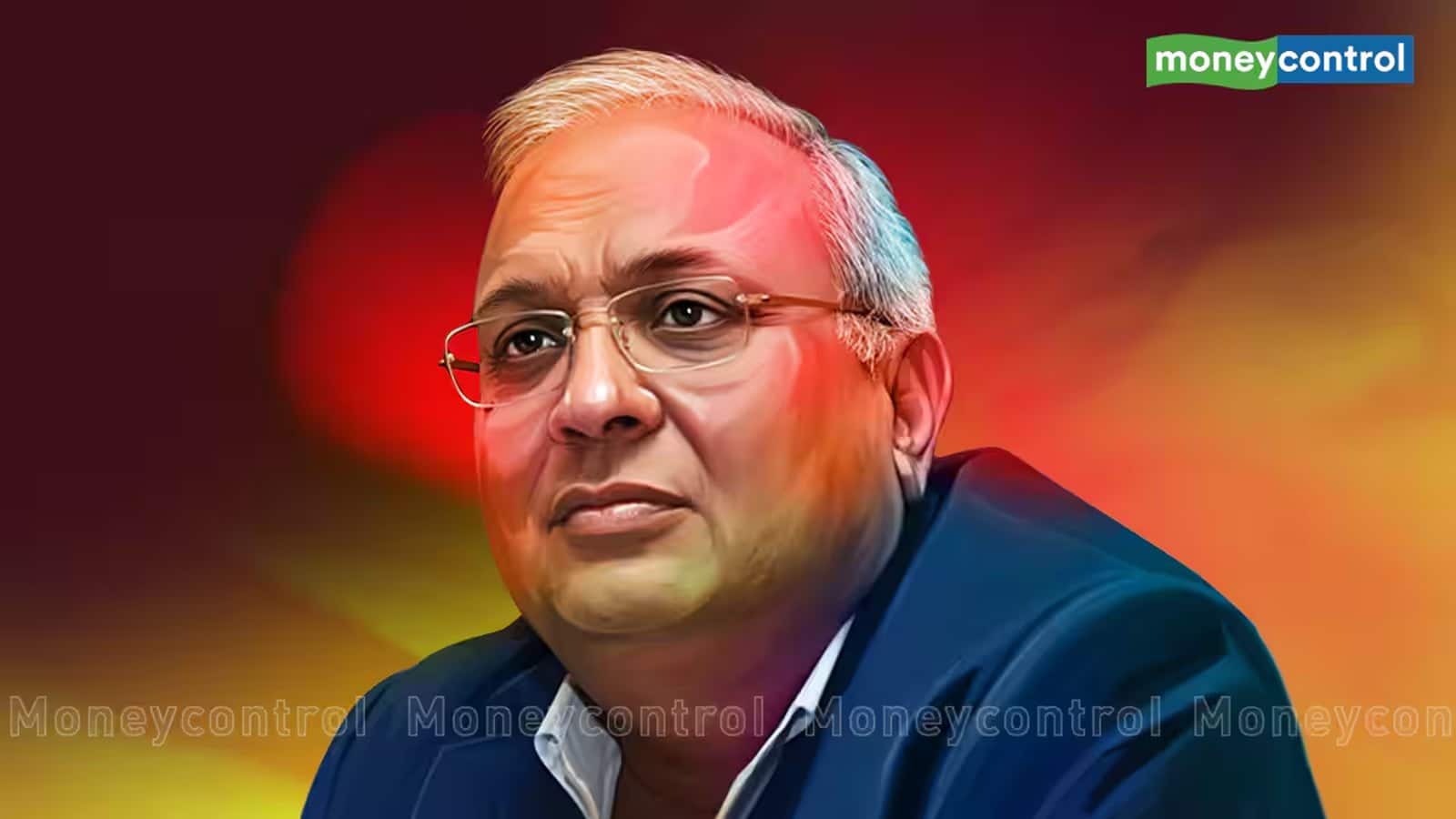

No need for intervention to strengthen the rupee at present free trade agreements will facilitate India’s access to developed countries – V Anantha Nageswaran

Finance Minister Nirmala Sitharaman presented the Economic Survey in Parliament yesterday. A good picture of the economy has been presented in the Economic Survey. Despite global uncertainty, the fast pace of growth is expected to continue in the future. Also, the need for both foreign investment and indigenous investment has been emphasized. After the release of the Economic Survey, Chief Economic Advisor V Ananth Nageswaran, in a conversation with CNBC-Awaaz, expressed his opinion on issues like how growth will get a boost, what will be the timeline for the global challenge to stop and what new needs to be done in Swadeshi.

How long will there be a global challenge to growth?

Ananth Nageswaran said that there is no answer to how long the global challenge will continue. There is no timeline on the Global Challenge. No one can tell when the Global Challenge will end. The global challenge depends on world leaders.

When is there a possibility of normal global world order?

There is no waiting for normal global world order. Can’t wait for any normalcy. Decisions will have to be taken according to the global situation. Something similar was seen at the Davos Economic Forum. The policy will have to be kept according to the circumstances.

What new needs to be done on Swadeshi?

Swadeshi is like a philosophy now. Swadeshi will have to be done as an action now. The world order has changed a lot. We have to move towards Swadeshi. A framework will have to be prepared for the indigenous strategy.

How much will Indian manufacturers benefit from FTA?

FTA (Free Trade Agreement) has made Indian access to advanced countries easier. There will have to be a little more focus on quality. The mantra of low price, high quality will be more effective. Manufacturers will get convenience by maintaining price and quality.

Why such a rise in gold-silver prices?

The impact of uncertainty in the economic and political environment is being seen on gold and silver. Geopolitics and currency war are big factors. Concerns over dollar and yen have also increased the trend towards gold and silver. Gold and silver are a type of real asset. Due to fear, investment in gold and silver has increased.

What is the strategy on rupee?

There is no need to intervene now due to the weakness of the rupee. There is a strategy to keep the rupee on market force. The currency has weakened due to global capital outflow. Due to high global interest, global capital outflow has been seen. Right now capital inflow in India is weak. The currency has also been affected due to weak capital flow. Currencies in capital importing countries weaken. There is no need for intervention right now to strengthen the rupee.

Source link

Stock Market: How can the market move on 30th January – stock market outlook for 30th January 2026 which stocks are top gainers and losers today

markets

Share Market Today: Indian stock markets closed in the green for the third consecutive day on Thursday, January 29. After the initial fall, Sensex and Nifty made a strong comeback and closed near their highest levels of the day. BSE Sensex closed at 82,566.37, up 221.69 points or 0.27 per cent. Nifty closed at 25,418.90 with a gain of 76.15 points or 0.30 percent.

Source link

Will there be an outcry in the share market after the budget – budget 2026 three risks that could trigger a post budget sell off in a nervous share market watch video to know more

markets

Budget 2026 Market Risk: This Sunday, February 1, Union Finance Minister Nirmala Sitharaman is going to present the budget for the next financial year 2027. The stock market is also waiting for special announcements from the budget so that it can get enthusiasm after the budget, but there are three important risks due to which selling pressure can increase after the budget. Read in details

Source link

Bet on these 5 stocks before the budget? – brokerage firm mofsl suggested these 5 stocks to buy before budget 2026 that can give upto 74 percent returns watch video to know the target price

markets

If you invest in the stock market and are looking for strong returns, then this video is very special for you. The country’s well-known brokerage firm Motilal Oswal has identified five such stocks in which investors can see returns of up to 74% from the current level. This list includes Coforge, Siemens Energy India, DLF, V-Mart Retail and Raymond Lifestyle. In this video, we will know why Motilal Oswal has selected these stocks, their target prices and what risks investors should keep an eye on.

Source link

Nifty gave an average return of only 0.2% on the budget day, know what the figures of 15 years say? – Nifty delivered just 0 2 percent average returns on budget day in last 15 years says Apurva Seth Samco Securities

Budget Day Nifty Returns: The stock market has given limited returns on the budget day in the last 15 years and the average return of the Nifty index on this day has been only 0.2 percent. These figures have been given by Apoorva Sheth, Head of Market Perspectives and Research, SAMCO Securities. Apoorva Sheth said that it is clear from the data of the last one and a half decade that the budget day has generally not proved to be a big trigger for the stock market. Also, the excitement created in the market regarding the budget often does not translate into any major trading movement.

Apoorva Sheth said that investors start paying attention to the market much in advance regarding the budget. But historical data shows that market movements on Budget day are often limited and volatile.

Based on the data from 2010 till now, Sheth said that on the budget day, the average movement of Nifty 50 index has been only 0.19 percent, while the average movement of Nifty Bank has been 0.42 percent. There has been a wide variation in results across different years, indicating that budget day moves depend more on positioning and pre-built expectations than policy announcements.

Generally the period before the budget is full of caution. During this period, investors appear to be reducing risks. According to the data, the average return of Nifty during the pre-budget phase has been –0.46 percent and that of Nifty Bank has been –0.03 percent, which points towards profit booking before the budget.

In contrast, the market has performed comparatively better in the post-Budget phase. The next day after the budget, Nifty has given an average return of 1.35 percent and Nifty Bank has given an average return of 1.69 percent. During this period, investors focus more on clarity in policies, liquidity, earnings outlook and growth visibility.

According to SAMCO analysis, on Budget day, February 26, 2010, the Nifty rose by 1.2 percent, while the previous returns were 1.6 percent and the subsequent returns were 4.1 percent. At the same time, after the budget date was changed to February 1 in 2017, the average movement of Nifty on the budget day has been around 1.8 percent.

If we look at the budget of 2025 last year, Nifty closed with a slip of 0.11 percent on that day. However, a day before that the index had gained 2.8 percent, while the return after the budget was –0.43 percent.

According to Apoorva Sheth, “Budget day itself rarely presents the biggest earning opportunity. History shows that investors with patience have benefited more. Pre-Budget volatility provides positioning opportunities, while post-Budget time has proven to be more stable and return-friendly.”

Disclaimer: The views and investment advice given by experts/brokerage firms on Moneycontrol are their own and not those of the website and its management. The website or management is not responsible for this. Moneycontrol advises users to consult certified experts before taking any investment decision.

Source link

Swiggy Q3 Results: Loss widened to Rs 1065 crore, revenue increased by 54 percent – swiggy q3 results loss widened to 1065 crore while revenue increased by 54 percent

Swiggy Q3 Results : Food delivery and quick commerce platform Swiggy has announced its financial results for the October-December quarter after market close on Thursday, January 29. The company has incurred a net loss of Rs 1,065 crore compared to the net loss of Rs 800 crore in the same period last year. The company’s consolidated revenue increased by 54 percent on an annual basis in this quarter to Rs 6,148 crore. But despite this its losses have increased. This increase in revenue was due to strong growth in the quick-commerce segment. This led to an improvement in the company’s top-line performance.

Last year, during this period, the company had achieved a revenue of Rs 3,993 crore. Compared to the previous quarter, revenue has improved by 10.55 percent. Whereas in the September quarter it stood at Rs 5,561 crore. At the same time, the company’s adjusted EBITDA loss has increased from Rs 490 crore to Rs 712 crore on an annual basis.

Quick Commerce GOV doubles to Rs 7,938 crore

Swiggy’s quick-commerce business outperformed its core food delivery segment in the quarter. Gross order value (GOV) of the quick-commerce business grew by 103.2 per cent year-on-year and 13 per cent quarter-on-quarter to Rs 7,938 crore. This is the fourth consecutive quarter when there has been more than 100 percent annual growth.

The company added users doing 0.8 million monthly transactions during this period and increased its Darkstore network by 34 stores to 136 in 31 cities. The company also increased the average size of its darkstore, bringing the total active darkstore area to 4.8 million square feet.

Average order value grew by nearly 40% YoY to ₹746 due to continued expansion of non-grocery products and larger basket sizes. Contribution margin improved by 9 basis points over the previous quarter and by 208 basis points year-on-year to -2.5 percent. While adjusted EBITDA margin improved by 65 basis points compared to the previous quarter to -11.4 percent. However, the loss increased by Rs 59 crore compared to the previous quarter to Rs 908 crore.

Food delivery segment showed stable performance

The company’s food delivery business has performed stable in the third quarter. GOV of this segment has increased by 20.5 percent on annual basis to Rs 8,959 crore. This is the highest growth rate seen in the last three years. Due to the rapid pace of user addition during the third quarter, users transacting per month grew 22% year-over-year to 18.1 million.

The adjusted EBITDA of this segment improved by 13.1 percent compared to the previous quarter and reached Rs 272 crore. Its adjusted EBITDA margin of GOV reached 3 percent, its highest level in the last two years.

Source link

No more expectations from Budget 2026? Axis AMC told what is most important for the stock market – budget 2026 27 expectations is muted fiscal path and bond market key for stocks says axis amc cio

Budget 2026 Expectations: Ashish Gupta, Chief Investment Officer (CIO) of Axis Asset Management Company, says that this time the market’s expectations regarding Budget 2026-27 are limited. He said that investors will keep an eye on the government’s fiscal discipline and policy stability more than any big announcement. Let us tell you that the budget will be presented in Parliament on Sunday, February 1 at 11 am.

“The good news is that market expectations are currently low,” Gupta said. He said that the government has already taken many important steps outside the budget. Such as reduction in GST rates, implementation of Labor Code, Production-Linked Incentive (PLI) and the recent trade deal. In such a situation, there seems to be limited scope for major new measures in the budget.

Concerns related to bond market

According to Gupta, after the selloff in the bond market in the last six months, investors will keep an eye on the government’s fiscal consolidation roadmap. “The market needs some confidence, especially on the bond supply and yields front,” he said.

He also stressed that a low fiscal deficit is helpful for the stock market as it keeps borrowing costs low and supports credit growth. “We need low-cost capital,” Gupta said.

Gupta said that bond yields have remained high since September, while in the meantime RBI has also cut rates. Despite this, financial conditions have become tight. According to him, weak credit growth will also be a negative sign for the stock market.

Emphasis on stability in tax policy

Regarding tax, Gupta believes that stability in tax policy is as important as any change in capital gains tax. He believes that reviewing the withholding tax can help in re-attracting debt investment in India, which has weakened due to capital outflows in the last one year.

Improvement in corporate earnings, still no return of FII

Gupta said that the corporate earnings outlook in India has improved. Midcap and smallcap companies are also seeing growth of more than 20%. Despite this, foreign investors have not been able to return. He said that strong growth in America and other global markets has kept capital away from India. Earnings recovery in the US is no longer limited to just big tech companies, but has spread to smallcaps, banking, manufacturing and consumption. This is the reason why foreign investors are not turning towards India.

Sectoral choice: Consumption and cement

Explaining his choice of sector, Gupta said that Axis AMC likes the consumption theme, which also includes the automobile sector. According to him, demand for two-wheelers, entry-level cars and commercial vehicles now seems to be improving. He also said that the demand for cement has increased in the last few months and consolidation is being seen in this sector. In Gupta’s words, “The cement sector is meeting all the required standards.”

Gupta further said that many of India’s economic indicators such as electricity demand, cement consumption and e-way bills have improved in recent months. However, he also said that the biggest challenge facing the market is still the withdrawal of foreign investors. Last year, about $19 billion went out of India and so far this month, about $3 billion has been withdrawn.

Also read- Huge rise of up to 13% in Gold ETF, leaving Silver ETF behind, now what should investors do next?

Disclaimer: The views and investment advice given by experts/brokerage firms on Moneycontrol are their own and not those of the website and its management. The website or management is not responsible for this. Moneycontrol advises users to consult certified experts before taking any investment decision.

Source link

Stock Market Live Update: Sensex falls 470 points, Nifty around 25200, pressure in auto, IT, bank shares – live stock market today januray 29 updates bse nse sensex nifty latest news crude rail vikas nigam wipro cupid thyrocare garden reach gland pharma symphony share price

Stock Market Live Update: RBI will keep the interest rate stable at 5.25% till 2026: Reuters Poll

The Reserve Bank of India will keep its key interest rate steady at 5.25% until 2026, according to a majority of economists polled by Reuters, as the central bank assesses the impact of its previous rate cut on the economy.

The central bank has reduced the benchmark borrowing costs by a total of 125 basis points from February 2025. But with inflation well below its target range and strong economic growth, there is no real reason for it to cut rates further.

However, growth is mainly being driven by government spending and not private investment, which is still lagging despite a short series of rate cuts by the RBI.

More than 80% of economists, or 59 out of 70, in a January 19-28 Reuters poll expected the Monetary Policy Committee to keep the repo rate at 5.25% at the end of its February 4-6 meeting.

Of the remaining respondents, 10 anticipated a 25-basis-point cut, while one expected a larger 50-basis-point reduction.

Most economists expect rates to remain at at least 5.25% through the end of this year.

Source link

Don’t trust the market rally, the numbers will cheat you! – trading plan there is still no confidence in this rally watch video to know what should you do now

markets

Trading plan: Nifty remained in the green throughout the day but has lost its gains from above. Outperformance has been seen in midcap and smallcap. India VIX appears to be down around 4%. Under the leadership of ONGC, there has been a huge rise in oil and gas shares. FMCG shares trade down led by Asian Paints

Source link