
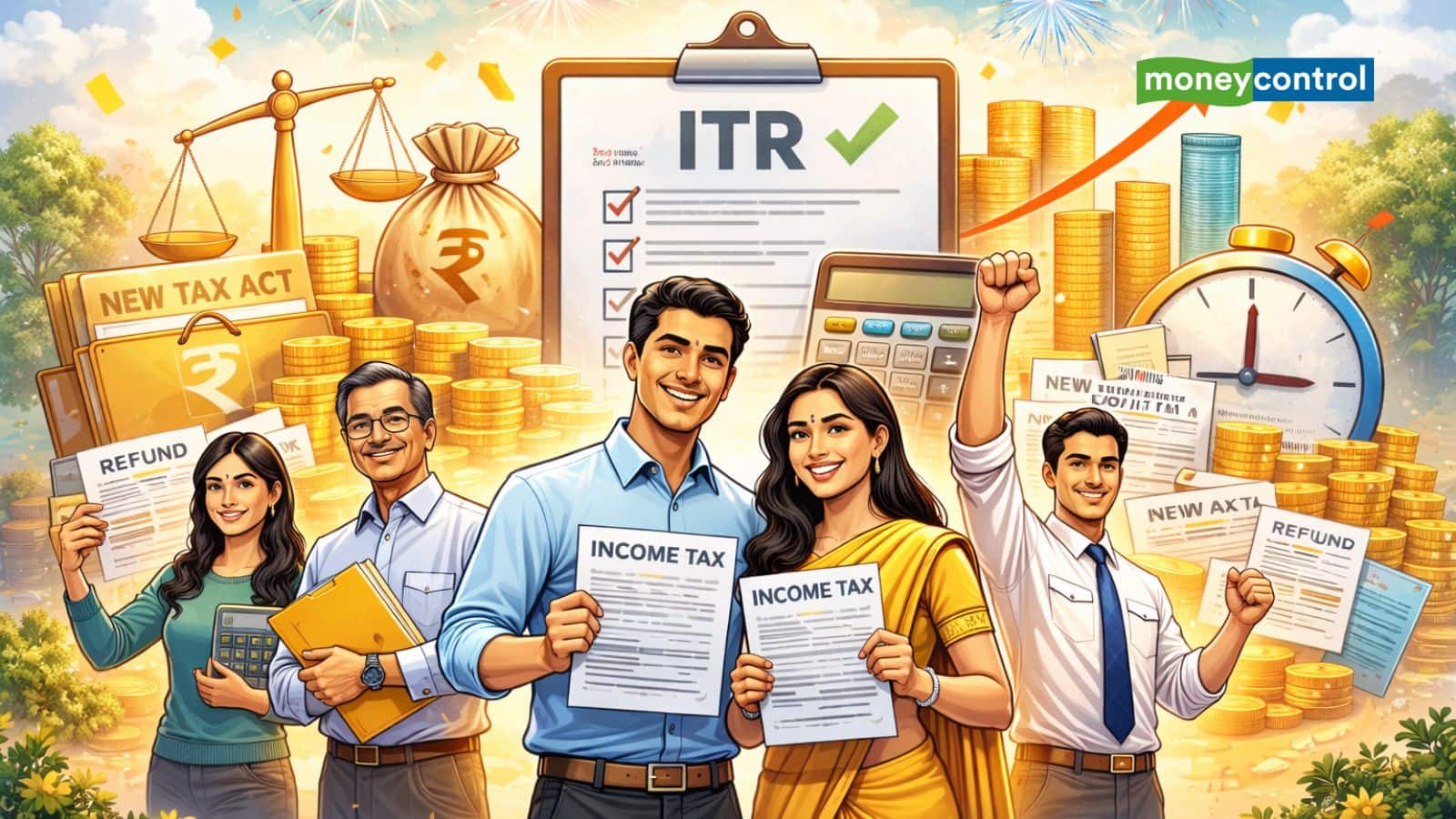
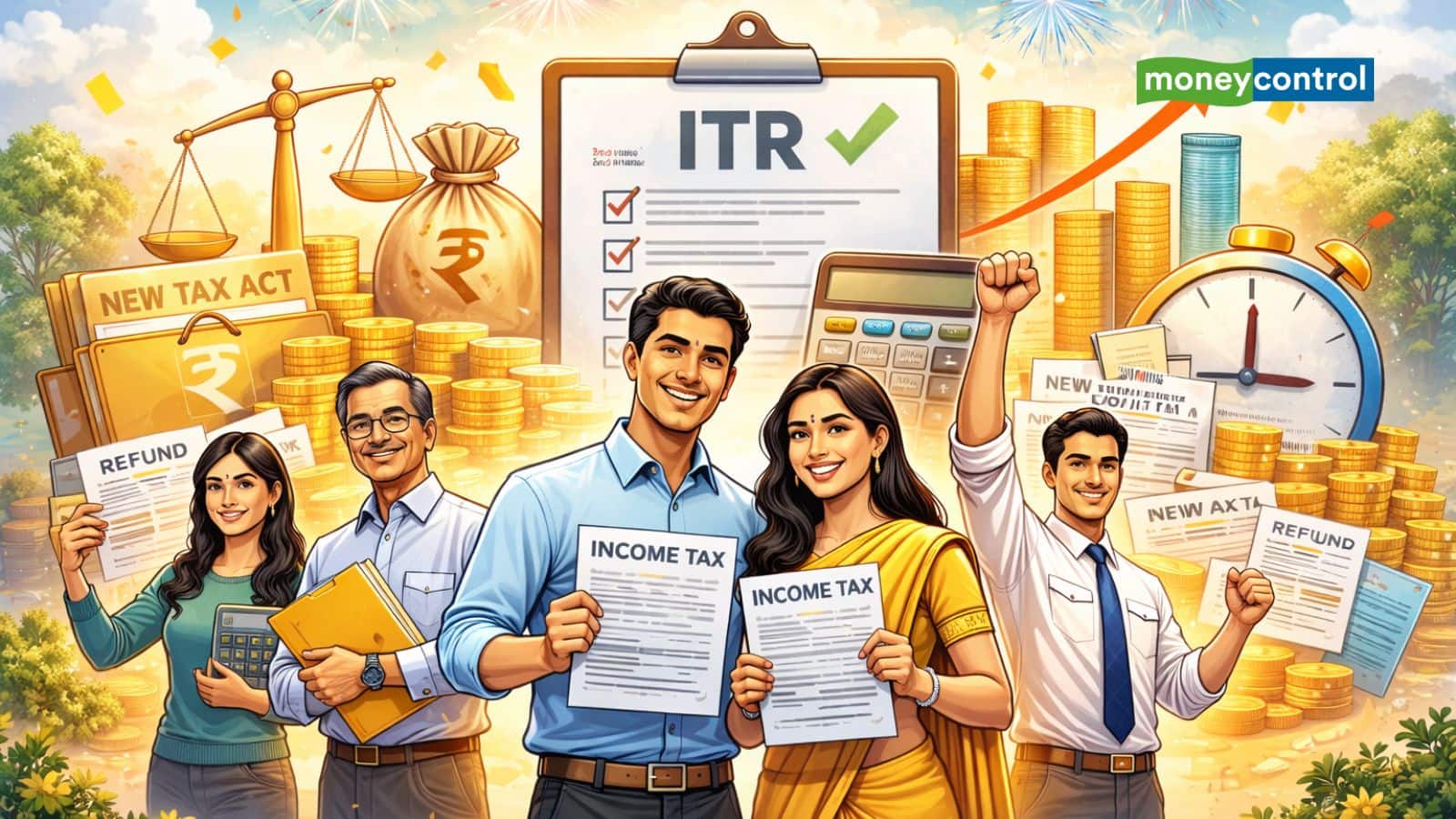
India’s income tax system is now moving towards a major structural change. The Income Tax Act, 2025 will come into effect from April 1, 2026 and with it the nearly 60 year old Income Tax Act, 1961 will become history. To implement the new law, the government has prepared draft Income Tax Rules, 2026, which also includes revised ITR forms.
The government has placed these draft rules and ITR forms in the public domain so that taxpayers, chartered accountants and other professionals can give their views. Suggestions have been sought on these till 22 February 2026, after which they will be finalized.
Now the most important question is what will change for the common taxpayer after the introduction of the new law and how will the system from ITR-1 to ITR-7 work. Let us know the answer.
ITR-1 is still the easiest
ITR-1 (Sahaj) will remain the same as before for resident individuals whose income comes from ordinary sources like salary, a house property and interest. The draft rules state that this form is for simple cases only.
The major change in the method of filing is that now digital filing will be the general rule. Only super senior citizens aged 80 years or above will be exempted from paper filing. All remaining taxpayers will have to file returns online through EVC or digital signature.
ITR-2 now default option for complex cases
ITR-2 will remain for those individuals and HUFs whose income is not from business or profession. But, those who have capital gains, more than one house property or foreign income and foreign assets. Under the new rules, as soon as a taxpayer is out of the scope of ITR-1, he will have to directly shift to ITR-2.
Due to the new capital gains framework and stricter monitoring of foreign assets, ITR-2 will now require more detailed disclosure than before.
Disclosures in ITR-3 will increase with business income
ITR-3 will remain the only form for taxpayers earning income from business or profession. The draft rules clearly indicate that as soon as a taxpayer goes beyond the limits of presumptive taxation or simple return, it will become mandatory to file ITR-3.
Due to expansion of rules related to properties, capital gains and special income categories, the disclosure burden in ITR-3 will clearly increase for professionals, traders and high-income taxpayers.
Most strictness on ITR-4 (Sugam)
The biggest change for individual taxpayers is seen in ITR-4 (Sugam). This form will still be available for those with presumptive taxation, but its limits have been made quite strict in the draft rules. These taxpayers will not be able to fill ITR-4.
- Holds foreign assets or foreign income.
- Is a director of a company.
- Held unlisted equity shares during the year.
- Annual income is more than Rs 50 lakh.
- There are more than two house properties.
- Are carry forward losses.
- Agriculture income is more than Rs 5,000.
This means that ITR-4 is no longer the easy shortcut it used to be. Many small business owners and professionals will now be forced to file ITR-3.
More monitoring in ITR-5 and ITR-6
The structure of ITR-5 and ITR-6 has remained the same as before. But, under the new rules, digital compliance, audit reporting and data linking have been made more stringent. Filing with digital signature will remain mandatory for companies as before.
Along with this, ITR-A has been linked to business reorganisation. ITR-BL will be applicable for block assessment cases. With these new returns, the integration of the system has also been strengthened.
Strictness on trusts and institutions in ITR-7
ITR-7, which is for charitable trusts, political parties and other exempt institutions, has a special emphasis on transparency. Audit reports, complete details of donations and utilization of funds will now be directly linked to the returns.
The draft rules clearly state that if there are irregularities or delays in filing, both registration and tax exemption may be in jeopardy.
Why is the government changing the tax rules?
The Draft Income Tax Rules, 2026 point in the same direction. Filing will be digital, simple returns will be limited, disclosures will be more and the tax system will depend more on structured data. The government has not yet taken the final decision. Taxpayers and professionals have time till 22 February 2026 to look at the draft ITR forms and put forward their practical problems.
After the implementation of the new law from April 1, 2026, the names of ITR may remain the same, but the method of filing, eligibility and accountability will have completely changed.
Stocks to Watch: After the trade deal, these 26 stocks will be in focus on February 9, may get a chance to earn huge profits.